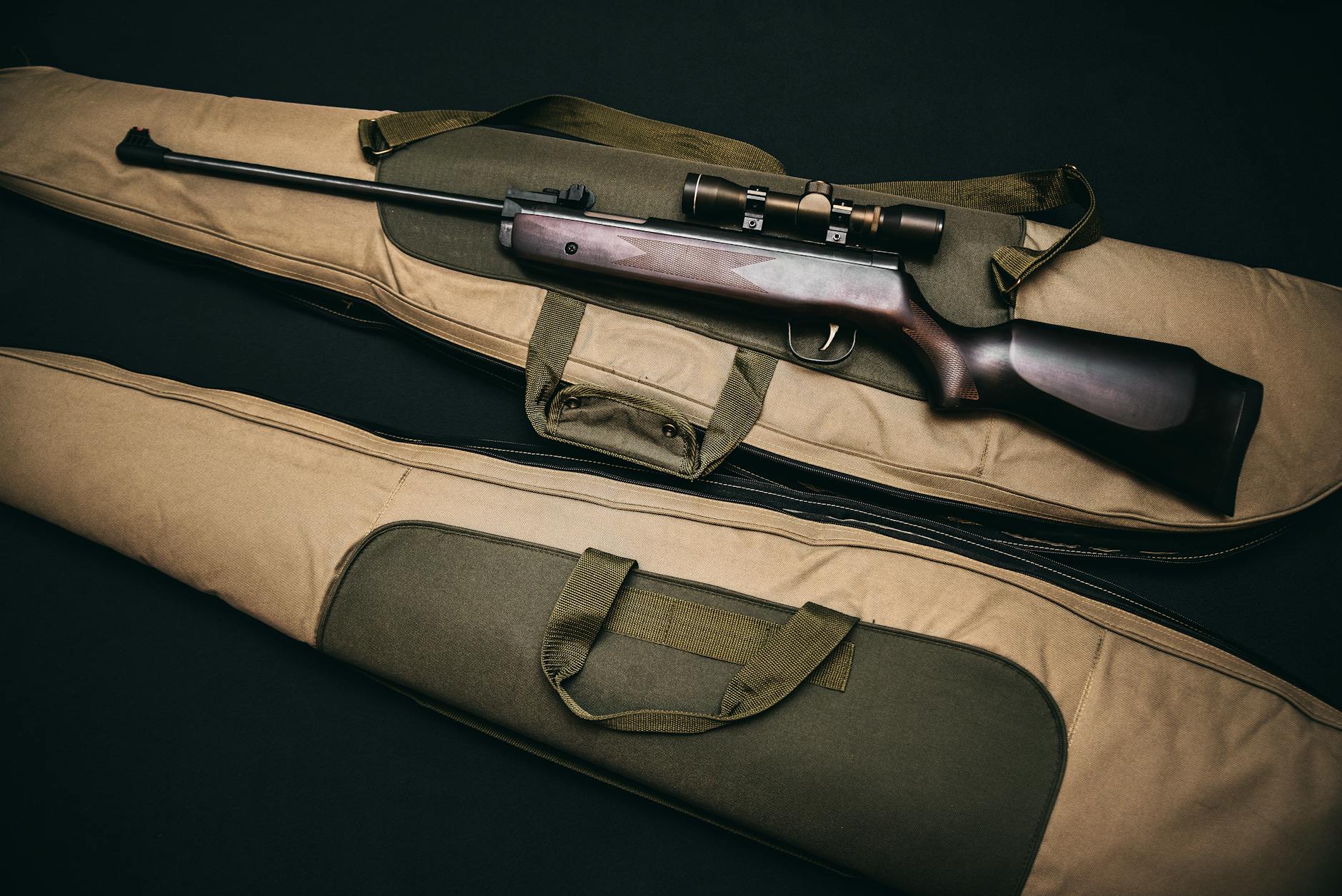
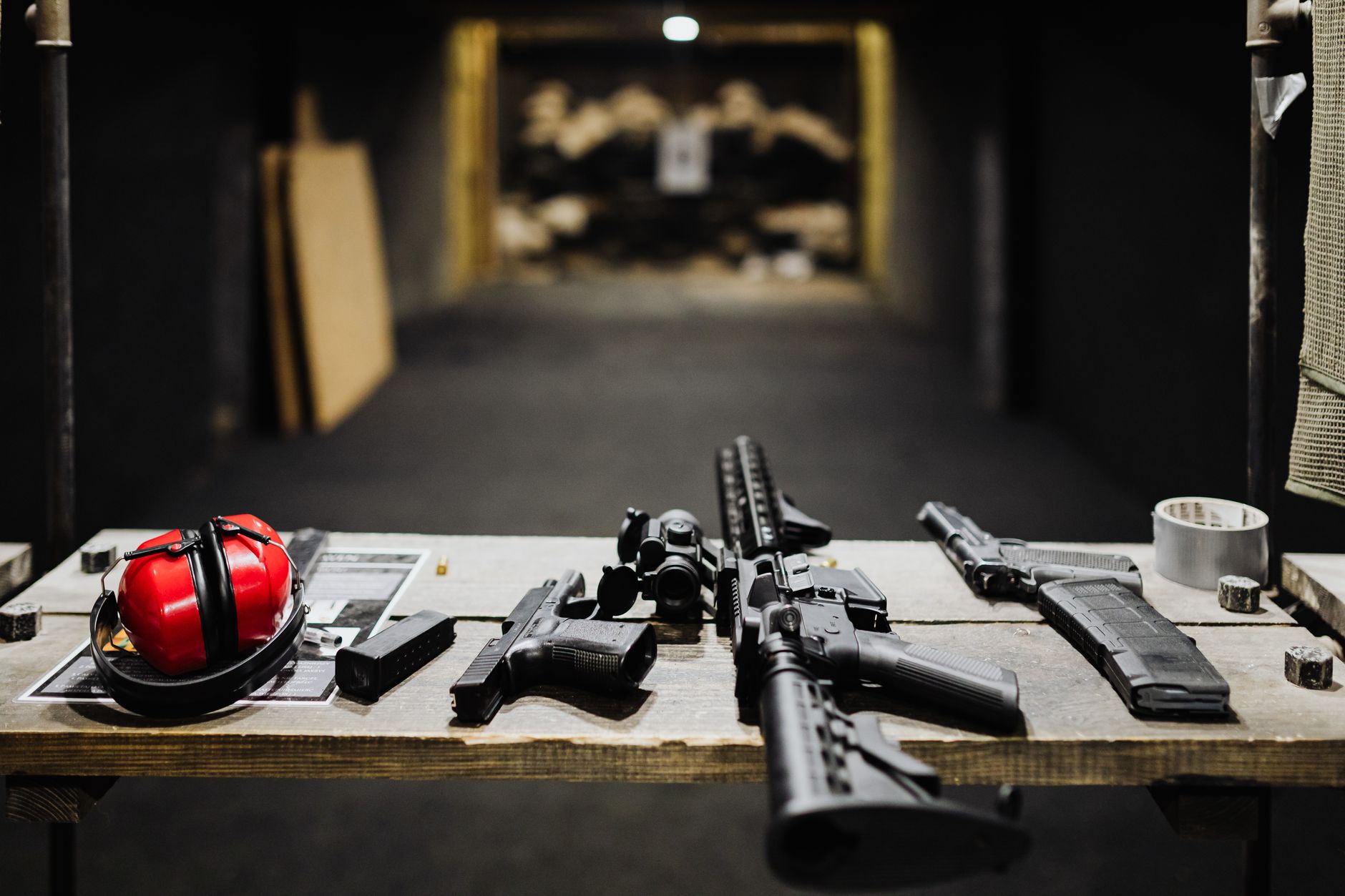
Key Takeaway: A safe, productive range day requires proper eye and ear protection, a reliable target system, a cleaning kit for post-session maintenance, and a range bag organized for quick access to ammunition and accessories. Arriving prepared isn't just more convenient — it's what separates shooters who improve consistently from those who just show up and burn rounds.
Eye and Ear Protection: The Non-Negotiables
No other gear matters if your eyes and ears aren't protected. Shooting without eye protection risks permanent vision damage from ejected brass, fragments, and gas. Shooting without ear protection — even for a single shot — contributes to cumulative hearing loss that is irreversible and doesn't show up until it's too late to fix.
Eye protection: ANSI Z87.1-rated ballistic glasses are the minimum standard. The Pyramex I-Force covers the basics at under $20. Step up to Oakley SI Ballistic M-Frame 3.0 or ESS Crossbow for a more secure fit with interchangeable lens systems. Clear lenses work for indoor ranges; amber or yellow lenses enhance contrast in low-light outdoor conditions. Wrap-around coverage prevents fragments from entering from the sides — open-frame eyewear is not appropriate for shooting.
Ear protection: Foam disposable earplugs (NRR 33) provide excellent passive protection at very low cost — always carry extras. Purpose-built earmuffs (NRR 25–32) are comfortable for extended sessions and easier to remove during instruction or conversation. Electronic hearing protection — the Howard Leight Impact Sport (~$50) and MSA Sordin Supreme Pro (~$200+) are both excellent — actively blocks impulse noise (gunshots) while amplifying ambient sounds below a safe threshold. This lets you hear range commands clearly while maintaining full protection. For serious range use, electronic protection pays for itself quickly in both safety and communication clarity.
Targets: What Works for Different Goals
The right target depends on what you're training for. Paper silhouette targets (FBI QIT or IPSC B-27) are the standard for defensive pistol and carbine training — they provide a realistic reference and clear feedback on shot placement. Self-adhesive repair pasters let you extend target life through a full session by covering old holes between strings of fire.
Steel targets (AR500 grade) deliver instant audio-visual feedback — the most satisfying confirmation of a hit. Maintain a minimum 10-yard standoff for pistol, 100+ yards for rifle. Always use hanging steel that swings on impact rather than fixed steel that can send fragments straight back. Never shoot steel with rifle calibers at closer distances than the manufacturer specifies.
Splatter targets (fluorescent backing visible through the hit hole) are excellent for precision work and diagnosing grouping issues from a distance. Caldwell Orange Peel and Birchwood Casey Shoot-N-C targets are reliable options at $10–20 for a pack of 12 — worth having in your range bag for any session where you're working on accuracy.
The Range Bag: Keep It Organized
A dedicated range bag keeps your session efficient and ensures nothing gets left behind. Look for: a main compartment that holds pistols or a broken-down carbine, separate zippered pockets for accessories (speed loaders, spare magazines, tools), an external loop for attaching hearing protection, and a base that sits flat without tipping. A bag that tips over mid-session is a real nuisance.
The Vertx Range Ready Trainer Bag and 5.11 Tactical Range Ready Trainer Bag are well-regarded in the $80–120 range for organization and durability. Cheaper range bags often fail at zipper pulls under regular use — false economy when your bag dumps its contents before you've even set up for the day.
Ammunition: How Much to Bring
For a 2-hour pistol session focused on skill development, 200–300 rounds per pistol is a productive amount. More than 300 rounds typically results in fatigue-degraded technique in the final third of a session — more reps aren't always better reps when form breaks down. For a maintenance or confirmation session (not skill development), 50–100 rounds confirms zero and mechanical function without burning through your training focus.
Bring more than you think you need. Running out mid-session breaks your rhythm. Extra rounds go back in the box unused. Keep ammunition in original boxes or a clearly labeled storage container — mixing calibers is a real and dangerous risk with serious consequences.
The Basic Cleaning Kit
Clean your firearm after every range session. Carbon fouling in the bore and action accumulates, affects reliability, and makes it harder to inspect for wear or damage. A complete basic kit includes: a bore brush and jag in the correct caliber, patches, a cleaning rod or bore snake (bore snakes are faster for pistol maintenance), CLP (Cleaner Lubricant Protectant) like Hoppe's No. 9 or Break-Free CLP, and a detail brush for the action and rails.
Break-Free CLP is the most versatile single-product solution — it cleans, lubricates, and protects in one application. More experienced shooters separate solvent from lubricant for optimal results, but CLP is entirely adequate for recreational and defensive firearms maintenance. The most important habit is simply doing it consistently after every session.
Frequently Asked Questions
What should I do at the range if my firearm malfunctions?
Keep the muzzle pointed downrange. Attempt the standard malfunction clearance appropriate to the failure type. If you can't clear it safely, keep the firearm pointed downrange, raise your hand for range officer assistance, and wait. Never turn toward other people or the range officer with a potentially loaded firearm — muzzle discipline is non-negotiable regardless of situation.
Is it okay to share lanes at an indoor range?
Typically yes, if the range allows it and both shooters are comfortable with the arrangement. Establish a clear communication pattern before starting — agree on how you'll signal ceasefire, who handles target changes, and when it's safe to reload. Clear, direct communication prevents the ambiguity that leads to range incidents.
How often should I clean my defensive carry firearm?
After every range session, and at minimum monthly for a carry firearm that isn't being regularly shot. Lint, perspiration, and ambient moisture accumulate in a holstered firearm over time. A field strip and light re-lubrication takes 10 minutes and ensures the firearm you're relying on is in proper working condition when it matters.
What's the best way to track improvement at the range?
Keep a simple log: date, rounds fired, drill or exercise, notable observations. Reviewing a month of logs reveals patterns — the time of day you shoot best, which drills are improving versus stagnating, and which fundamentals need targeted work. A phone note or small notebook in your range bag is enough. Consistent documentation separates deliberate practice from just shooting for fun.