
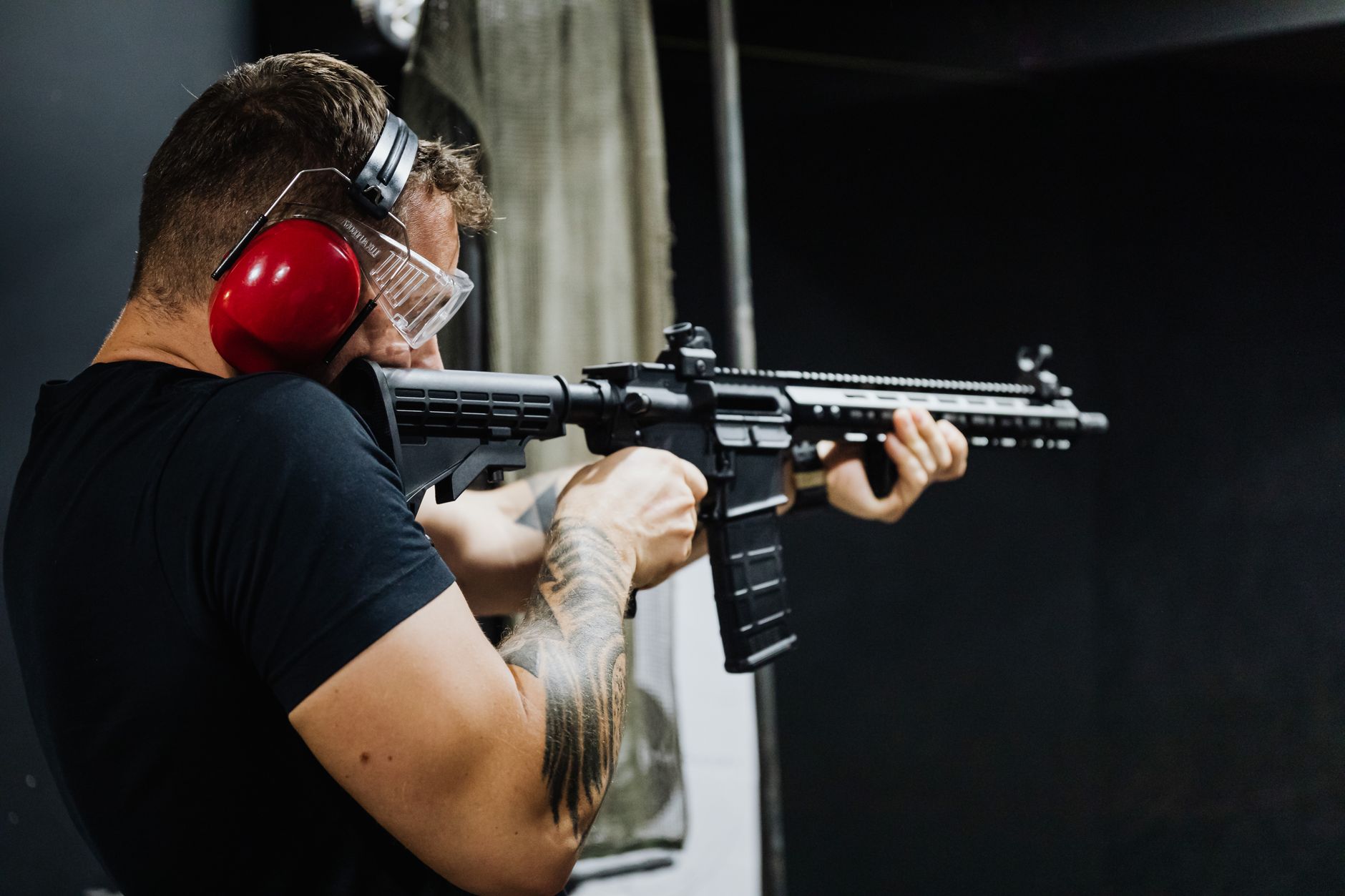
Key Takeaway: A complete AR-15 upper receiver package for beginners should include a quality BCG (bolt carrier group), charging handle, barrel in the correct length and twist rate for your intended use, and a handguard — Aero Precision, PSA (Palmetto State Armory), and Bear Creek Arsenal offer complete uppers at $200–500 that deliver reliable performance without requiring experience in building.
What's Included in a "Complete" Upper Package
A complete upper receiver assembly arrives ready to attach to your lower receiver with no additional parts required. It includes: the upper receiver (the top half of the AR frame), barrel with gas system installed, handguard (forearm), muzzle device (flash hider or compensator), bolt carrier group (BCG), and charging handle. Some packages include a forward assist and dust cover; confirm this before purchasing if these are important to you.
This is in contrast to a "stripped upper" (just the receiver body, nothing installed) or a "partial upper" (receiver plus some components). For beginners, a complete upper assembly is strongly recommended — the components are selected to work together, the gas system is tuned, and the timing is confirmed by the manufacturer.
Barrel Length and Twist Rate: The Key Decisions
Barrel length affects velocity, muzzle report, and maneuverability. The three most common choices:
A 16" barrel is the most common civilian AR-15 configuration. It keeps the rifle as a legal "rifle" under NFA regulations (16" minimum barrel length without a short-barreled rifle stamp), provides good velocity with common 5.56/.223 loads, and balances maneuverability and ballistic performance well for range use, home defense, and recreational shooting.
A 14.5" barrel with a pinned and welded muzzle device achieves the 16" legal minimum while providing the handling characteristics of a shorter barrel. Popular with shooters who want a more compact platform without SBR paperwork.
An 18"–20" barrel maximizes velocity for precision work at extended ranges. These are less common for home defense builds but appropriate for competition and varmint hunting applications.
Twist rate determines which bullet weights the barrel stabilizes best. A 1:8 twist rate handles bullets from 55 to 77 grains effectively — the most versatile choice for general-purpose use. A 1:7 twist stabilizes heavier 77+ grain bullets preferred for precision and military applications. A 1:9 twist is optimized for lighter 55–62 grain bullets but is becoming less common on quality uppers.
Top Complete Upper Packages by Budget
Under $300 — PSA (Palmetto State Armory): PSA complete uppers consistently deliver reliable function at the lowest price point in the market. Their 16" midlength gas system uppers with M4 profile barrels are a legitimate starting point for new AR-15 owners. PSA has shipped millions of units and their quality control has improved significantly over the past five years. The BCG and charging handle included are functional if not premium.
$350–500 — Aero Precision: Aero's complete uppers step up material quality and tolerances. Their M4E1 Enhanced uppers use a monolithic upper receiver with integrated handguard attachment that reduces forward assembly screws, and the barrels are cut to tighter specifications. BCG quality is meaningfully better than budget options. This is the recommendation for shooters who want to build once and not upgrade components for several years.
$400–500 — Bear Creek Arsenal: Bear Creek offers complete upper packages that include quality barrels (many chrome-lined), M-LOK handguards, and reliable BCGs at a competitive price point. Their 16" 5.56 complete uppers are popular for their value proposition.
What to Look For in the BCG
The bolt carrier group is the heart of the AR-15 operating system — it chambers rounds, extracts cases, and cycles the action. For a beginner complete upper, confirm the BCG is: made from 9310 steel or better for the bolt body (properly hardened), has a magnetic particle inspection (MPI) certificate or HPT (high pressure test) marking on the bolt, and uses a chrome-lined or nitride-coated carrier for corrosion resistance and easier cleaning. Most quality complete uppers in the $300+ range include BCGs that meet these specifications.
Frequently Asked Questions
Do I need to do anything to the upper before shooting?
Yes — inspect all fasteners (barrel nut, gas block screws, handguard), confirm the BCG is properly lubricated (most ship dry or minimally lubricated), and function-test with the upper assembled to your lower before live fire. A dry-fire function check through a full magazine cycle confirms the BCG seats, extracts, and cycles correctly before committing to a range session.
What's the difference between a midlength and carbine gas system?
Gas system length (carbine, midlength, rifle) refers to the distance between the gas port in the barrel and the receiver. Midlength gas systems on 16" barrels have a slightly longer dwell time, which typically results in softer recoil, less bolt carrier velocity, and longer component life compared to a carbine-length gas system on the same barrel. Midlength is the recommended choice for a 16" general-purpose upper.
Can I switch upper receivers between lowers?
Yes — all AR-15 lowers and standard uppers use the same two takedown pin locations. Any mil-spec upper will function on any mil-spec lower. This is one of the defining features of the AR-15 platform's modularity. Different caliber uppers (5.56, .300 Blackout, .224 Valkyrie) can use the same lower with the appropriate magazine.